



KimiaFam Pharmaceutical Company is one of the leading manufacturers of medicines and hygiene products. More than a decade of extensive effort by its R&D divisions and well-equipped laboratories has resulted in the production and distribution of products that have prevented unnecessary national currency outflow and, at the same time, enabled self-sufficiency in this industry.
By drawing on past experience, employing skilled experts and specialists, making optimal use of advanced technologies, and applying up-to-date global scientific knowledge and technical expertise, KimiaFam has succeeded in creating a major transformation in this field within the country.
The contribution of over 150 specialists—including pharmacists, veterinarians, chemists, microbiologists, and other experts—across various research departments, along with the establishment of unique and fully equipped laboratories, has provided powerful tools for advancing the company’s research.
The production of more than 80 types of critical veterinary and poultry medicines is one result of these efforts. Achieving the technology and technical know-how to produce Nanosil disinfectant, along with more than 10 types of disinfectants for skin, hands, various surfaces, instruments, and equipment for use in medical centers and hospitals, industries, beauty centers, and sports facilities, represents a major accomplishment of KimiaFam’s R&D division.
Personal and Household Hygiene
With the rise of emerging diseases and the high cost of medical treatment, observing hygiene principles and using disinfectants in all living environments—especially healthcare and medical facilities—has become increasingly essential. In this regard, KimiaFam, supported by its R&D division, well-equipped laboratories, skilled experts, and advanced global technologies, and guided by the belief that prevention is better than treatment, has made a valuable contribution to our country by producing high-quality hygiene and disinfectant products.
It can confidently be said that one of KimiaFam Pharmaceutical Company’s greatest achievements in serving the public is the introduction of Nanosil disinfectant to the Iranian market. Due to its safety and unique properties, this disinfectant has widespread applications in improving public hygiene and preventing the outbreak of various diseases. It can be easily used for disinfecting hands, skin, respiratory air, drinking water, and a wide range of surfaces in the food and pharmaceutical industries and beyond.
Among the notable advantages of Nanosil is that it requires no rinsing after disinfection and provides lasting antimicrobial action. The water used for rinsing conventional disinfectants can itself become a source of recontamination. Even if a disinfectant eliminates 100% of microorganisms, rinsing may reintroduce contaminants, allowing them to multiply and increase the microbial load on previously disinfected surfaces—ultimately defeating the purpose.
With Nanosil, not only is this problem eliminated, but its prolonged disinfecting effect prevents microorganisms from growing or multiplying on treated surfaces for an extended period.
Medical & Hospital
Infectious diseases in medical centers and hospitals remain a major challenge, and hospital-acquired infections are the leading cause of death in critical care units—such as burn wards, ICUs, and neonatal units. The emergence of mutated microorganisms, microbial resistance, 21st-century infectious diseases, and the morbidity and mortality associated with these infections, along with the threat they pose to individual, social, and economic health, and the importance of the principle “prevention over treatment,” all underscore the growing necessity of using disinfectants.
Proper use of disinfectants—through controlling microbial contamination in the environment, especially on equipment and instruments—reduces the risk of resistant microbes, decreases the use of antibiotics and helps preserve their effectiveness, and leads to significant reductions in morbidity, mortality, and overall costs.
Given humanity’s unexpected confrontation with new threats caused by pathogenic and resistant microorganisms, the need for more effective and efficient disinfectant compounds—beyond the traditional options—has become increasingly evident.
Modern disinfectants must not only comply with quality standards but also effectively act against a wide range of microorganisms, including various bacteria, fungi, yeasts, and viruses, while causing minimal adverse effects on user health. Today, the safety of disinfectants and topical antiseptics goes far beyond concerns about acute or subacute toxicity—it also includes issues of allergenicity, irritation, and ecological hazards.
Another critical consideration in developing new disinfectants and antiseptics is preventing microbial resistance resulting from long-term use. One of the solutions favored by scientists and research communities is combining well-known antimicrobial agents to harness their synergistic effects, thereby creating new and more efficient formulations.
Advantages of Combination Disinfectant Formulations:
Broader antimicrobial spectrum, covering gaps in the activity of each individual component.
Reduced risk of progressive microbial resistance associated with using a single active ingredient alone.
Lower required concentrations of each component, resulting in fewer side effects, reduced irritation and hypersensitivity, and decreased ecological impact.
In this regard, KimiaFam Pharmaceutical Company has successfully developed innovative and advanced disinfectant formulations for use in medical centers and hospitals—products designed to deliver rapid, effective, and safe antimicrobial action across various surfaces and applications.
Food Industry
Foodborne illnesses are among the most common and serious public health problems worldwide. In addition to causing death and sickness, they impose heavy costs on society, families, healthcare and social systems, and commercial establishments. These costs include medical expenses, the cost of investigating foodborne outbreaks, lost income due to absence from work, business closures, and legal expenses or fines.
The health consequences of foodborne illnesses vary depending on the type of pathogen, the stage and duration of treatment, age, and other factors that determine an individual’s resistance and sensitivity. Most of these diseases are preventable—provided that food producers and suppliers receive proper training in food hygiene, and consumers are better educated when choosing their food.
Food hygiene refers to all measures necessary during the production, storage, and distribution of food to ensure that a safe and hygienic product reaches the consumer. In contrast, illnesses caused by contaminated food are known as “food poisoning,” and based on their mechanisms, they fall into four main categories. One of the most important types is foodborne infections, which occur when contaminated food is consumed and often cause gastrointestinal symptoms such as vomiting, diarrhea, abdominal pain, and nervous system disturbances.
Generally, these diseases are transmitted when contaminated food enters the digestive tract. Salmonellosis, campylobacteriosis, vibriosis, E. coli infections, and certain viral illnesses are examples of foodborne infections. Food of animal origin is especially vulnerable: if the slaughtered animal is infected, contamination can occur either primarily or secondarily. Secondary contamination is far more common and results in wider disease spread in the community.
Contaminated food can easily transfer pathogens to kitchen environments and utensils, and humans can pass contamination to others or to other foods through handling. In addition to the above, water and wastewater, animal feed, rodents, insects, birds, wild animals, and domestic animals all contribute to the transmission and spread of foodborne infections.
People infected with diseases such as salmonellosis may appear to recover, but bacteria may persist in the intestines, gallbladder, liver, or even kidneys, and continue to be shed through feces or urine. These individuals pose serious risks to healthy humans and animals. Therefore, regular testing of workers in farms, poultry units, slaughterhouses, food processing industries, restaurants, and kitchens is essential, and infected individuals must not be allowed to handle food. Among foods, meat, meat products, and eggs consistently exhibit higher contamination rates.
Food poisoning occurs in two primary forms: bacterial and fungal. Bacterial toxins are produced by organisms such as Clostridium botulinum, Escherichia coli, Shigella, Bacillus cereus, and pathogenic Staphylococcus. Fungal toxins (molds and yeasts), such as aflatoxins and mycotoxins, also cause severe foodborne illnesses. Contamination occurs either through contact with infected animal products or through secondary contamination during food preparation.
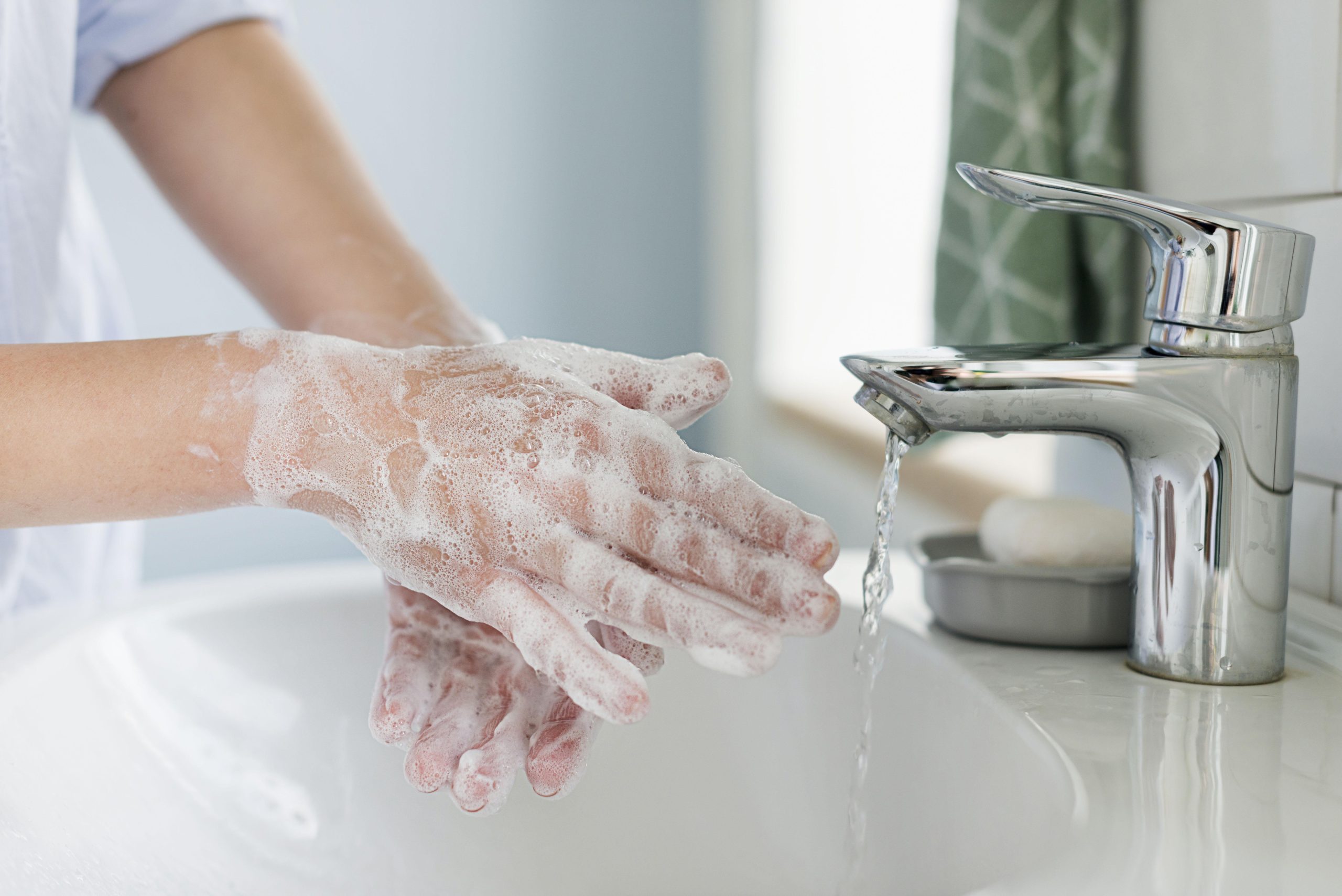
Preventive measures include: proper cleaning and disinfection of equipment and tools in food industries and kitchens after work, thoroughly cooking food, preventing individuals with sore throat or respiratory infections from handling food, regular hand washing, using gloves for food distribution, applying sufficient heat to canned products to destroy botulinum toxins, and avoiding the use of swollen cans.
Given all this, choosing and using the right disinfectant is essential for effective sanitation and preventing foodborne illnesses.
Selecting the Right Disinfectant
With the wide variety of chemical disinfectants available—each with specific properties, usage conditions, and mechanisms of action—selecting the appropriate disinfectant requires technical knowledge and familiarity with the field. Ideally, a disinfectant should:
Be broad-spectrum (effective against bacteria, viruses, protozoa, fungi, and spores)
Be non-irritating, non-toxic, and stable
Be cost-effective
When selecting a disinfectant, one must consider its ability to eliminate pathogens, its safety in the presence of people and food, its effects on equipment and surfaces, and its cost. Safety refers to toxic risks to users and the environment, which must be carefully evaluated. Residual levels and surface compatibility are also important.
A disinfectant’s effectiveness depends on several factors:
Type of contaminating microorganisms
Level of contamination
Concentration and quantity of disinfectant
Contact time and temperature