



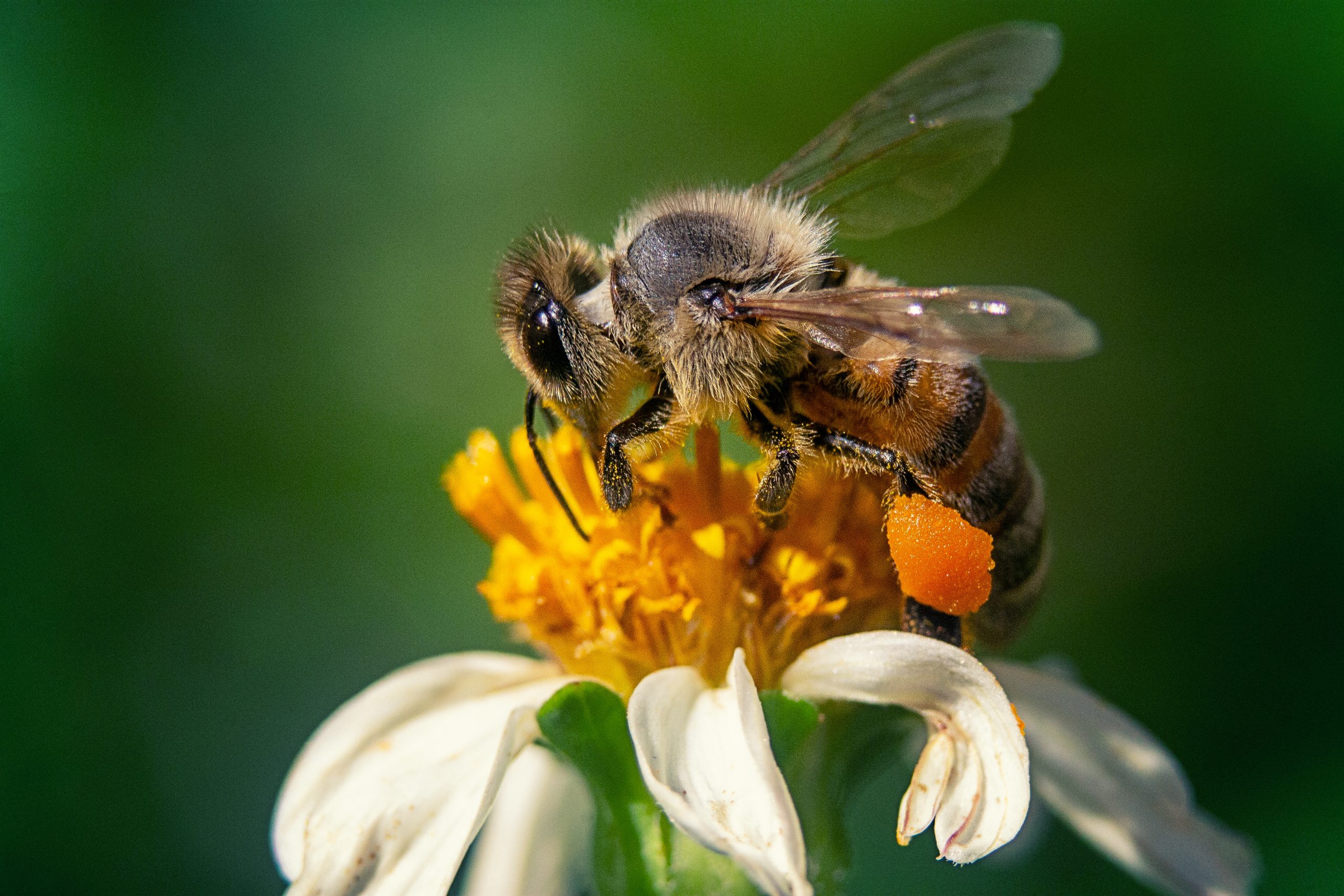

Honeybee
Nosema disease is one of the most common—and possibly the most widespread—diseases affecting adult honeybees in temperate regions of the world. The causative agent is a protozoan called Nosema apis Zander, belonging to the family Microsporidia. Its size is approximately 5 × 3.5 micrometers.
The disease is more prevalent during winter, especially in areas with long, harsh winters. It is less common in hot and dry regions. Nosema enters the digestive tract in the form of spores and infects the bee’s midgut. Once inside, the spore wall dissolves due to digestive enzymes, activating the organism. It then attacks the epithelial cells of the midgut where it multiplies. Afterward, it spreads into the digestive tubules and is excreted.
This entire cycle lasts 10 to 14 days, producing 20–30 million spores.
Symptoms include a swollen abdomen, bees crawling on the ground, inability to fly, reduced colony population and productivity, weakened hives, and the most noticeable sign: bee diarrhea, seen as yellow streaks on the combs. Because Nosema affects the hypopharyngeal glands of worker bees, it reduces royal jelly production, which in turn weakens the entire colony.
A simple diagnostic method exists but requires minimal handling. One approach is to press the abdomen so the stinger and gut are expelled. Alternatively, hold the bee’s thorax with one hand and the end of the abdomen with the other, then gently pull them apart until the gut is exposed. A healthy bee’s gut appears brown, but in diseased bees, due to high spore accumulation, it looks milky white. For definitive diagnosis, laboratory methods—such as direct microscopic observation of the pathogen—are used.
Treatment consists of using fumagillin, available in powder form. Fumagillin works both as a preventive and a therapeutic agent.
Antibiotic
The animal body has an exceptional ability to respond effectively to bacterial invasion. Most infections develop and resolve without any visible symptoms or signs. Therefore, many infections do not require chemotherapy. However, some infections do require treatment. The purpose of chemotherapy is to use the selective toxicity of a drug to help the patient rapidly and effectively control a bacterial infection without causing harmful effects to the host.
Antibiotics are the primary drugs used in antibacterial chemotherapy. The term antibiosis was first introduced by Louis Pasteur in 1877, contradicting the then-common belief in universal microbial coexistence. It was already known that one microorganism could inhibit the growth of another, both inside and outside the body. What drew attention was the observation that typhoid bacteria failed to grow in purified cultures where other organisms thrived.
Pseudomonas aeruginosa was particularly effective in this regard, and purified cultures of this organism led to a commercially successful preparation known as pyocyanase, which was mistakenly believed to be an enzyme. Another line of reasoning that contributed to the development of antibiotics was the understanding that all organic matter is eventually degraded by soil microorganisms. This encouraged researchers to examine soil samples for microbes that might produce enzymes capable of attacking pathogenic organisms. This approach led to the discovery of aminoglycosides, tetracyclines, erythromycin, and chloramphenicol, all of which later achieved widespread clinical use.
The first true antibiotic was tyrothricin, isolated in 1939 from a protein-free extract of Bacillus brevis. Tyrothricin contains two peptides—tyrocidine and gramicidin. Although it protected mice from pneumococcal infections, it proved far too toxic for general use and was restricted to topical application.
The accidental discovery of the antibacterial effect of penicillin by Fleming in 1929, and its introduction into medicine in the early 1940s, marked the true beginning of the antibiotic era. A plate of agar contaminated with Penicillium notatum had been left on a bench for five weeks; the mold produced a significant amount of penicillin, inhibiting nearby staphylococcal colonies and creating a clear zone where bacteria had been destroyed.
The isolation of 6-aminopenicillanic acid in 1959 was another major milestone. Although it lacked antibacterial activity itself, it served as the core structure for producing all synthetic penicillins. A similar approach was taken with cephalosporins, leading to numerous clinically useful derivatives. Today, a natural source is no longer essential, as many synthetic antibacterial agents exist—often considered part of the broader class of antibacterial drugs, including medications such as sulfonamides.
Antibacterial drugs have no therapeutic purpose other than helping eliminate invading microorganisms. Although pharmacologically inert, they are not harmless and can cause significant toxic effects. It is also important to note that although antibacterial drugs are used specifically to treat bacterial infections, additional measures—such as antitoxins, supportive medications (e.g., vitamins, minerals), and anti-inflammatory drugs—may also be crucial in managing the consequences of infection.
Antibiotic – Water-Soluble Powders
• Kimia Fumagillin® (Fumagillin):
Fumagillin, provided as a water-soluble powder containing the antibiotic dicyclohexylammonium (DCH), is used for the prevention and treatment of Nosema apis disease in honeybees. Because this drug is ineffective against Nosema spores, it must be administered over several weeks, offered to bees in medicated syrup (sugar water) as a supplemental food source until complete eradication of the infection is achieved.
This medication is specifically used for treating Nosema apis infection in honeybees.
More…
Vitamin
Vitamins are organic compounds required in very small amounts for the metabolism of nutrients, vital bodily functions, growth, development, and overall health. Poor nutrition and an unbalanced diet can lead to the deficiency or absence of one or more vitamins, resulting in various diseases such as beriberi and pellagra.
Vitamins facilitate the metabolism of amino acids, fats, and carbohydrates, and enable growth, development, and the repair of body cells. Some vitamins aid in nutrient absorption in the intestines, while others act as catalysts. Their effects extend to epithelial tissues and bones, and each vitamin prevents a specific disorder.
Funk originally used the term “vitalamine”—meaning a life-essential amine—to describe substances that cured beriberi and were believed to belong to the amine group. Once it became clear that many vitamins are not amines, the final e was removed and the term “vitamin” was adopted.
Vitamins are classified into two major groups: fat-soluble vitamins (E, K, D, A) and water-soluble vitamins (vitamin C and the B-complex vitamins). Alongside minerals, vitamins are essential for the body; without them, health and internal balance become unstable, vital functions are disrupted, and complications may arise—sometimes leading to death.
Vitamins regulate the body’s metabolism, and even a deficiency of a single vitamin can put the entire organism at risk. It is also worth noting that most vitamins are obtained from primary natural sources.
Vitamin – Oral Solutions
• Kimia Choke® (Multivitamin + Sorbitol + Dextrose):
Used to enhance performance and meet special nutritional requirements during growth and production.
– To reduce mortality, strengthen weak flocks, and compensate for growth delay
– After antibiotic therapy and administration of antiparasitic drugs
– During heat stress and dietary changes
More…
Vitamin – Water-Soluble Powders
• Kimia Renyl Vitaminized® (Vitamins + Minerals + Sorbitol):
Kimia Renyl Vitaminized increases the natural productivity of the flock and improves its physiological performance. It also leads to increased appetite and higher water consumption.
More…