

Description
Antibiotic
Composition
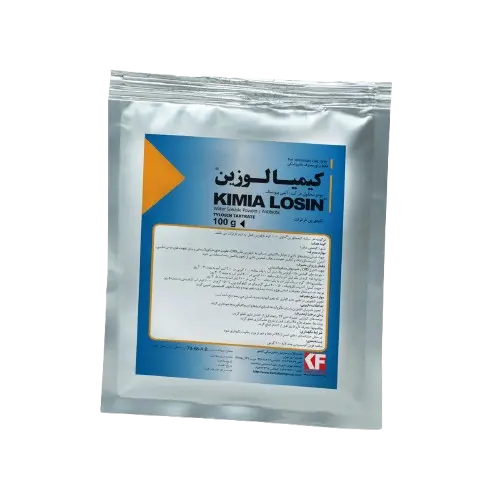
Each sachet of Kimia Lozine® contains 100 g of active tylosin in the form of tylosin tartrate.
Indications
Used for the prevention, control, and treatment of diseases caused by tylosin-sensitive bacteria, including CRD, mycoplasmal infections, and other chronic respiratory infections.
It is also indicated for the control of necrotic enteritis and reduction of secondary infections following stress caused by live vaccination.
Additionally, this product is used in honey bees for the control of American foulbrood (Paenibacillus larvae).
Dosage and Administration
Control of CRD and Mycoplasmal Infections
Broiler Chickens:
0.5 g per 1 liter of drinking water, or one 100-g sachet per 200 liters of water.
-
Prevention: During the first 3 days of life, then 1 day at 4 weeks of age
-
Treatment: 2–3 days
Replacement Pullets:
0.5 g per 1 liter of drinking water, or one 100-g sachet per 200 liters of water.
-
Prevention:
-
First 3 days of life
-
1 day at 4 weeks of age
-
2 days at 9–12 weeks of age
-
2 days at 16–20 weeks of age
-
-
Treatment: 2–5 days
Turkeys:
0.5 g per 1 liter of drinking water, or one 100-g sachet per 200 liters of water.
-
Prevention: First 3 days of life, then 1 day at 4 weeks of age
-
Treatment: 2–5 days
Control of Necrotic Enteritis
20–50 mg per kg of body weight, or 150 g per 1,000 liters of drinking water, for 5 days.
Honey Bees
Mix 200 mg of Kimia Lozine® per colony with 20 g of sugar and administer once weekly for 3 consecutive weeks.
Note: Dosage and duration of treatment vary depending on disease type and severity and must be determined by a veterinarian.
Contraindications
-
Use of tylosin is contraindicated in laying poultry producing eggs for human consumption.
-
Contraindicated in poultry with hepatic disorders.
Drug Interactions
-
Avoid concurrent administration of tylosin phosphate with other macrolides, lincosamides, and aminoglycosides.
-
Do not mix tylosin phosphate with other antibiotics in feed.
-
Diets containing tylosin must not include more than 2% bentonite.