


From the very beginning of its operations, Kimiafaam Pharmaceutical Group established its Research and Development (R&D) department based on a strong belief in the importance of research and the necessity of advancement in the industry. In 2006 (1385 in the Iranian calendar), the R&D group successfully obtained an independent R&D license from the Ministry of Industry and Mines.
Experts in various fields—including veterinary science, pharmacy, chemistry, microbiology, and others—are actively working in this department. In addition, the group benefits from the collaboration and consultation of prominent university professors and reputable scientific institutions. The R&D department operates with a vision of creating a reliable link between the pharmaceutical industry, various related industries, universities, and scientific centers.

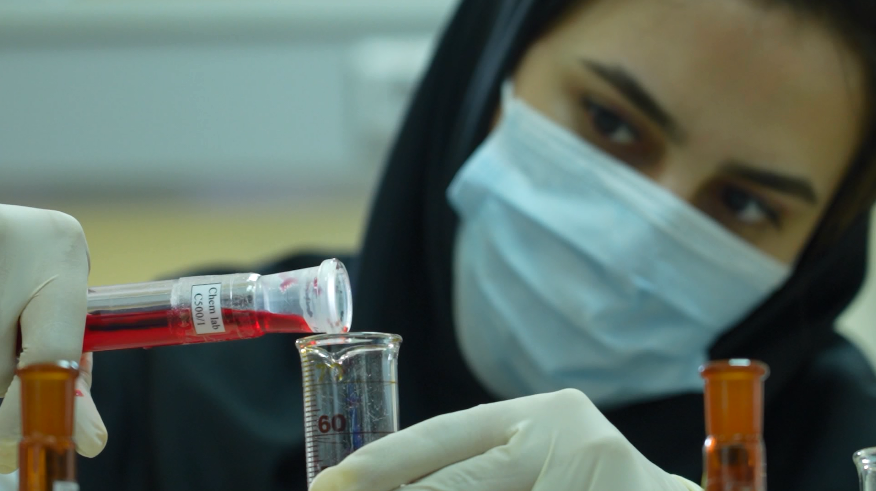
As part of the quality control division of Kimiafaam Pharmaceutical Company, this unit is responsible for physical inspection of packaging materials—including bottles, pouches, labels, and all packaging components—based on established checklists. It is also responsible for sampling raw materials and performing initial quality evaluations of these materials.

This laboratory is responsible for monitoring environmental and microbial conditions across various production sections. Activities include microbial control of water, personnel, raw materials, packaging equipment, products, and the determination of vitamin and antibiotic potency. These procedures are performed using advanced equipment such as autoclaves, ovens, laminar flow hoods, UV devices, various incubators, and spectrophotometers, following the latest pharmacopeia methods.

This unit is responsible for monitoring the stability of all manufactured products periodically and systematically for up to one year after their expiration date. It also handles quality control of products based on received complaints and reports, as well as Post-Marketing Quality Control (PMQC) of medicines in the market.

In this unit, samples of final products are stored for up to one year after their expiration date, under appropriate temperature and humidity conditions, following WHO guidelines and pharmacopeial standards.
Accelerated stability studies are also conducted in this unit using germinators of various capacities.

This section performs a wide range of analyses on raw materials and finished products. All tests are conducted according to validated Standard Operating Procedures (SOPs) prepared based on the latest pharmaceutical references, including the United States Pharmacopeia (USP), European Pharmacopeia (EP), and British Pharmacopeia (BP).
These analyses are carried out using advanced equipment such as HPLC, UV, GC, potentiometers, FTIR, atomic absorption devices, melting point apparatus, distillation columns, and other routine laboratory instruments.

This laboratory is responsible for supervising all production sections, including manufacturing and packaging stages. Its purpose is to ensure the implementation of GMP regulations throughout every phase of production—from raw-material weighing to final product packaging.
By equipping this laboratory with instruments such as conductometers, pH meters, viscometers, and others, real-time qualitative and quantitative evaluation of products becomes possible during production within the manufacturing halls.
Pharmaceutical formulation plays a crucial role in the effectiveness of any medication. Drugs are rarely administered as pure chemical substances and are almost always delivered as formulated products or dosage forms. To achieve this, formulations may range from relatively simple solutions to complex drug-delivery systems, using suitable additives or excipients. These additives, together with other components, enable dissolution, suspension, thickening, protection, and ultimately the formation of various pharmaceutical products and dosage forms.
To ensure product quality, numerous characteristics are required, including chemical and physical stability, appropriate protection against microbial contamination when necessary, uniformity of drug dosage, user acceptability, and proper packaging and labeling.
It is essential to recognize the differences that may exist between formulations that appear similar and the possible reasons behind these differences. It is now clear that formulation can influence the therapeutic performance of a drug. For this reason, increasing attention in recent years has been directed toward minimizing differences in bioavailability, especially for chemically equivalent products.
To optimize the bioavailability of an active substance, it is often necessary to carefully select the most suitable chemical form of the drug. Such decisions must consider required solubility, particle size, and physical form of the drug, as well as the excipients used in producing the pharmaceutical product. Proper manufacturing processes and packaging also play important roles.
Kimiafaam pharmaceutical products, in addition to utilizing modern formulations (from companies such as Hipra, Krka, and Janssen), are manufactured using raw materials sourced from reputable European suppliers and with the highest possible concentration of active ingredients. In Kimiafaam’s multivitamin solutions, a solvent called Cremophor is used, which provides exceptional solubility for these products.
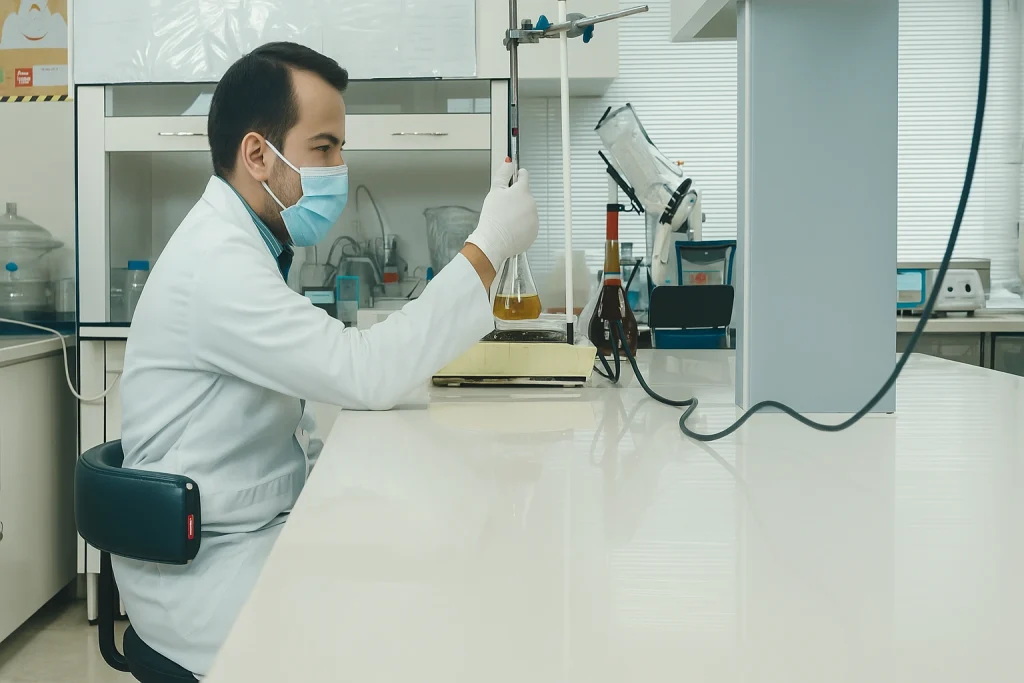
Given the rapid changes in organizational and social environments and increasing global competition, organizations today are more determined not only to attract, but also to retain and develop individuals for present and future operations. In other words, organizations are now seeking a new form of capital known as human capital.
At Kimiafaam Pharmaceutical Company, human capital is considered the most important indicator of growth—an essential and undeniable asset. Human resources possess value far exceeding that of physical assets.
In this regard, Kimiafaam has constantly invested in developing and training its human resources. The presence of numerous specialists in veterinary medicine, pharmacy, laboratory sciences, industrial engineering, informatics, and other fields—working full-time or part-time with the company—attests to this commitment. Kimiafaam has gone even further: beyond training and nurturing its internal workforce, it provides educational support to provincial representatives and both retail and wholesale customers. By holding training workshops in various fields, the company makes significant contributions to public health awareness. Annual educational seminars held across different provinces serve as clear evidence of these efforts.
Before the Iranian Revolution, the veterinary pharmaceutical market was trade-based, and most veterinary medicines were imported, with only a small proportion produced domestically—and those were usually simple, basic drugs. Despite numerous challenges, the Iranian veterinary pharmaceutical industry has achieved remarkable progress in recent years, and today a significant portion of veterinary medicines is manufactured domestically.
The scientific and technological capabilities of Iranian pharmaceutical companies are comparable to those of drug-exporting countries. What creates quality differences among certain medicines is the quality of raw materials used in production. If high-quality raw materials are used, the resulting medicines will match foreign products in quality and effectiveness. Conversely, poor-quality raw materials inevitably lead to reduced product quality.
Since its establishment, Kimiafaam has consistently used premium raw materials sourced from reputable European and North American manufacturers, such as Krka, Janssen, and others. Customer satisfaction with Kimiafaam’s products is a testament to this commitment.
Pharmacopeia tests represent minimum requirements, not ideal standards. Yet many pharmaceutical manufacturers settle for the minimum. Kimiafaam, however, consistently uses optimal amounts of active ingredients to maximize product stability and accelerate therapeutic action.
Furthermore, regulatory organizations in Iran define drug quality within a “permissible range.” Two similar drugs from different manufacturers may fall at opposite ends of this range—one at the highest quality boundary and the other at the lowest. Kimiafaam’s policy has always been to maintain its products at the highest end of this acceptable range. This is precisely why many clinicians prefer prescribing Kimiafaam medications.
In addition, the excipients used in drug production significantly influence absorption rate and overall therapeutic effectiveness. Some companies reduce costs by using low-grade excipients, while companies that prioritize product quality and customer satisfaction—such as Kimiafaam—use high-quality excipients that enhance drug performance. This approach is a consistent manufacturing standard at Kimiafaam.
One of the most important factors in preserving the quality of pharmaceutical products is appropriate packaging—both physically and chemically—using pharmaceutical-grade materials. Proper packaging increases product shelf life, protects active ingredients, and enhances therapeutic effectiveness for end users. It also minimizes negative effects of cold, heat, environmental stress, poor transportation, and oxygen exposure.
Distinctive Features of KimiaFam Packaging:
Graduated Bottle and Double-Layer Cap
The bottle and its components are made of high-density polyethylene (HDPE). This material, combined with the double-layer cap, ensures that the contents remain protected against physical and chemical damage and environmental stress. A transparent, lightly tinted brown graded strip allows easy measurement. All components are pharmaceutical-grade, ensuring no interaction with the drug and maximizing shelf life.
Graduated Measuring Cup
The measuring cup acts as a secondary protective layer and enables users to accurately measure the required dose.
Multi-Layer Seal and Aluminum Proof Foil
Firmly attached to the bottle opening, this seal prevents the entry of external contaminants—especially oxygen—thus preventing oxidation and increasing product stability.
Protective Bottom Layer
At the base of Kimiafaam bottles, a separate polyethylene layer is placed to reduce temperature-related and transportation-related risks. This double-layer structure helps maintain the drug’s quality at a superior level.